This book gallery contains monograph publications by Pepperdine University faculty members or staff. Each entry contains a link through which the user may access or purchase the publication.
-
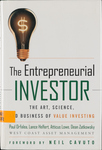
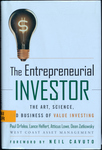
The entrepreneurial investor :the art, science, and business of value investing
Paul Orfalea
2008
The Entrepreneurial Investor will inspire you to treat investing like a business and to think of yourself as an owner. Through solid examples and a light narrative, Paul Orfalea skillfully explores the essence of the entrepreneurial investor, which includes balancing the art and science of this discipline and viewing investing itself as a business. Along the way, he also examines how the elements of focus, opportunism, and involvement can improve your overall investment results.
-
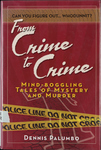
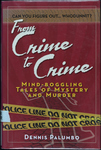
From Crime to Crime: Mind-Boggling Tales of Mystery and Murder
Dennis Palumbo
2008
Hollywood screenwriter Dennis Palumbo (My Favorite Year) threw in the pen to become a psychotherapist to the very same writers, directors and producers he had worked with in the industry. Now, he has picked that pen up again -- this time writing dark, yet humorous, short mysteries. In From Crime to Crime - Mind-boggling Tales of Mystery and Murder, Palumbo offers readers a chance to solve each mystery by giving them all the clues necessary.
-
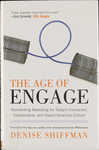
The Age of Engage: Reinventing Marketing for Today's Connected, Collaborative, and Hyperinteractive Culture
Denise Shiffman
2008
Whether you're a marketer, communications expert, CEO, or business owner, you face the daunting challenge of marketing with your customers, not to them. In this book, Denise Shiffman lays out a blueprint for how you can create persuasive value so that your products stand out, build trust by reshaping audience interactions, expand social currency and extend your sphere of influence, and deploy new marketing vehicles to capture the hearts, minds, and wallets of your customers.
-
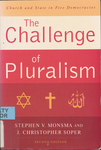
The Challenge of Pluralism: Church and State in Six Democracies
J Christopher Soper, Kevin R.den Dulk, and Stephen V. Monsma
2008
-

Diagnosis and Treatment of Mental Disorders Across the Lifespan
Stephanie M. Woo and Carolyn Keatinge
2008
This clinical diagnostic training manual and essential reference employs a lifespan approach to psychopathology and emphasizes the development and application of clinical diagnosis and treatment skills.
-
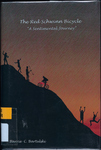
The Red Schwinn Bicycle: "A Sentimental Journey"
Barrie C. Bartulski
2007
The story of how six boys' lives are touched by the use of a special red bicycle.
-
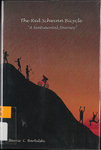
The Red Schwinn Bicycle: "A Sentimental Journey"
Barrie C. Bartulski
2007
An endearing and captivating story, The Red Schwinn Bicycle: A Sentimental Journey, recounts the journey of one bike and the fun, selfishness, arguments, sadness, and fond memories that its presence creates for six boys.The first owner, "Red," receives the bike through a stroke of sheer luck when his mother wins her bet on a game of chance known simply as "the numbers." While experiencing firsthand the ugliness of war and death on Iwo Jima as a Marine in World War II, Red envisions the good times he had with his bike to seek relief from fierce fighting with Japanese soldiers. Red must decide if he will pass the bike onto his brother Robert, and will nephew Richard become another owner of the bike! Jack, a neighborhood boy whose widowed mother cannot afford a bike, is allowed to use the bike, becomes a paratrooper and is sent to Korea. Barrie, who believes he will someday follow in family ownership of the bike fights fiercely for the first time, with a brother he loves dearly over the bike. Tommy, an adopted, friendly little boy, who also uses the bike will take it on its final ride.A touching memoir, The Red Schwinn Bicycle is the story of how six boys' lives are affected by the use of this enchanting and magnificent bike.
-
Pursued: A Novel
John R. Beyer
2007
A killer without remorse, burning with pride, and having the time of his life, Zachary Marshall is unstoppable-until Detective Jonas Peters unexpectedly arrives in the midst of one of Marshall's heinous crimes. After a bank robbery goes from bad to worse and leaves three dead-including a little girl-Marshall finds himself the target of the most intensive manhunt Riverside, California, has ever witnessed. Detective Peters becomes frustrated and half-crazed as the case falters due to lack of clues and evidence. Ordered to take a vacation from the department before he drives all the other detectives crazy with his constant tirades, he reluctantly agrees. But an innocent remark to the media changes the entire scenario-now the pursued has become the pursuer.Detective Peters takes this homicide case especially hard, having seen his own young daughter murdered during a bungled convenience-store robbery years earlier. The pain of the darkness is too deep, and the spirits are waiting to remind him; they will not forgive him, and he cannot forgive himself. There will be no rest until Marshall is caught.
-
The Great Omission: Amazing Ways the Church Muddles the Message: How to Get it Right and Tell it Right
Robert Blair
2007
If Jesus were still alive and preaching today, would he be building a huge church structure? Would he be talking about the "trigger" issues, the hot topics that seem to dominate our pulpits? Would he be marching in the streets -- either against or in favor of -- abortion, gay rights, or repealing the death penalty? Robert Blair contends that Christ would not be politically active or overtly try to influence the government. Instead, he asserts that Jesus would preach the same simple gospel that he did 2,000 years ago. In The Great Omission, Blair makes the case that the contemporary followers of Jesus should be doing what he would do -- and that our primary objective ought to be preaching the good news to every person on the planet. Blair believes that it is only by doing that, and by personally assisting the poor, that we can truly glorify God.
Every minister will profit by "reading and heeding" this book -- but those in the pews will also benefit from reading The Great Omission. Too often laypersons wish to honor God but receive garbled signals from church leadership about the church's main purpose. This book will become a lightning rod for change in returning our churches to the biblical message and suggesting the right methods to tell it.
-
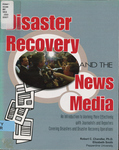
Disaster Recovery and the News Media: an Introduction to Working more Effectively with Journalist and Reporters Covering Disasters and Disaster Recovery Operations
Robert C. Chandler and Elizabeth Smith
2007
-
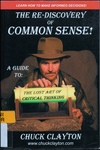
The Re-Discovery of Common Sense!: A Guide to the Lost Art of Critical Thinking
Charles Walker Clayton
2007
This book is a practical guide to teach you critical thinking skills. You will learn concepts, methods, and resources to make informed decisions, complete tasks quickly, shop smarter and create a fun life for yourself. -- Taken from the back cover.
-
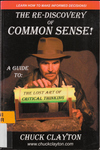
The Re-Discovery of Common Sense!: A Guide to the Lost Art of Critical Thinking
Charles Walker Clayton
2007
This book is a practical guide to teach you critical thinking skills. You will learn concepts, methods, and resources to make informed decisions, complete tasks quickly, shop smarter and create a fun life for yourself.
-
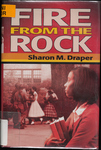
Fire from the Rock
Sharon M. Draper
2007
In 1957, Sylvia Patterson's life--that of a normal African American teenager--is disrupted by the impending integration of Little Rock's Central High when she is selected to be one of the first black students to attend the previously all white school. Includes author's note and related websites
-
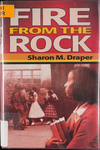
Fire from the Rock
Sharon M. Draper
2007
In 1957, Sylvia Patterson's life--that of a normal African American teenager--is disrupted by the impending integration of Little Rock's Central High when she is selected to be one of the first black students to attend the previously all-white school.
-
What Are the Dead Sea Scrolls and Why Do They Matter?
David Noel Freedman and Pam Fox Kuhlken
2007
Sure, there are plenty of scholarly volumes on the Dead Sea Scrolls, full of indexes, footnotes, and jargon for those in the know. But what if you're not a specialist? What if you just want a basic understanding of what the Dead Sea Scrolls are, where they came from, and why they're so important? That's where this little book comes in. David Noel Freedman and Pam Fox Kuhlken here offer an informed, inside look at these significant ancient texts. Full of humor and behind-the-scenes glimpses into research on the Scrolls, What Are the Dead Sea Scrolls and Why Do They Matter? is a fascinating, accessible guidebook -- perfect for any reader seeking a brief, quality introduction to this inscrutable subject.
-
What are the Dead Sea Scrolls and Why do they Matter?
David Noel Freedman and Pam Fox Kuhlken
2007
"[The authors] here offer an informed, inside look at these significant ancient texts. Full of humor and behind-the-scese glimpses into research on the Scrolls, [this book] is a fascinating, accessible guidebook-perfect for any reader seeking a brief, quality introduction to this inscrutable subject."--Back cover.
-
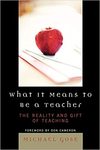
What it Means to Be a Teacher: The Reality and Gift of Teaching
Michael D. Gose
2007
The stories, anecdotes, humor, and insights found in this book capture what it means to be a teacher. The book begins with common encounters that are the hallmark of the new-teacher experience, but continues into equally entertaining tales that come with years of working with students, parents, staff, faculty, and administrators. What it Means to Be a Teacher mirrors a teacher's playful sense of irony and a deep appreciation of the old wisdom about feeling "the impact of the great, occasional and accidental joy" which comes with teaching. Whether a teacher, principal, or administrator, readers will relate to the profound sense of what it means to be a teacher.
-
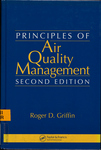
Principles of Air Quality Management
Roger D. Griffin
2007
This reference bridges the gap between popular mainstream articles, highly technical publications, and research journals dealing with air quality. The second edition of Principles of Air Quality Management features new sections on air toxics, new information on chronic and acute health effects, and new approaches to the assessment of those impacts on sensitive populations. It emphasizes toxic air pollutants and alternative approaches to management of air quality in local environments. The book explains how primary pollutants form in industrial and mobile combustion processes and the latest on how they are controlled. It also presents in-depth information on the meteorology of atmospheric transport and explains how secondary photochemical pollutants form in ambient air.
-
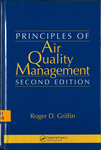
Principles of Air Quality Management
Roger D. Griffin
2007
This reference bridges the gap between popular mainstream articles, highly technical publications, and research journals dealing with air quality. The second edition of Principles of Air Quality Management features new sections on air toxics, new information on chronic and acute health effects, and new approaches to the assessment of those impacts on sensitive populations. It emphasizes toxic air pollutants and alternative approaches to management of air quality in local environments. The book explains how primary pollutants form in industrial and mobile combustion processes and the latest on how they are controlled. It also presents in-depth information on the meteorology of atmospheric transport and explains how secondary photochemical pollutants form in ambient air.
-
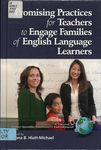
Promising Practices for Teachers to Engage Families of English Language Learners
Diana B. Hiatt-Michael
2007
-
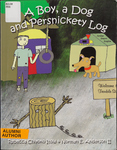
A Boy, a Dog and Persnickety Log
Rebecca Chiyoko Itow and Norman E. Anderson
2007
Three friends who live on Trouble Street have an adventure, in which one of them finds a hidden talent.
-
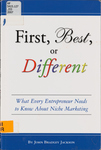
First, Best, or Different: What Every Entrepreneur Needs to Know about Niche Marketing
John Bradley Jackson
2007
Are you an entrepreneur, small business owner, or corporate marketing executive with questions like these? What viral marketing methods are most successful? What direct mail marketing tactics create the newest leads? How can I optimize my website and increase traffic? How can I motivate and retain my top sales reps? How do I choose the right Public Relations firm? What is podcasting and how do I get started? What outdoor advertising techniques work best? Get answers to these questions along with practical advice on over 100 topics. Written in plain English with short easy-to-read chapters, this book demystifies niche marketing by delivering easy-to-understand definitions and practical suggestions. About the Author John Bradley Jackson brings street-savvy sales and marketing experience from Silicon Valley and Wall Street. His resume also includes entrepreneur, angel investor, corporate trainer, philanthropist, and consultant.
-
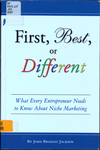
First, Best, or Different: What Every Entrepreneur Needs to Know about Niche Marketing
John Bradley Jackson
2007
"First, Best, or Different is one of those exceptional books that changes the way you think about marketing and entrepreneurs. I highly recommend this book." Manny Fernandez, Chairman Emeritus, Gartner Inc. Innovative Marketing and Sales Strategies for Niche Markets Are you an entrepreneur, small business owner, or corporate marketing executive with questions like these? . What viral marketing methods are most successful? . What direct mail marketing tactics create the most new leads? . How can I optimize my website and increase traffic? . How can I motivate and retain my top sales reps? . How do I choose the right Public Relations firm? . What is podcasting and how do I get started? . What outdoor advertising techniques work best? Get answers to these questions along with practical advice on over 100 topics. Written in plain English with short easy-to-read chapters, this book demystifies niche marketing by delivering easy-to-understand definitions and practical suggestions
-
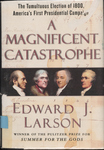
A Magnificent Catastrophe: the Tumultuous Election of 1800, America's First Presidential Campaign
Edward J. Larson
2007
The 1800 presidential election, the last great contest of the founding period, was so convulsive and so momentous for American democracy that Jefferson would later dub it "America's second revolution." America's first true presidential campaign gave birth to our two-party system and etched the lines of partisanship that have shaped American politics ever since. The contest featured two of our most beloved Founding Fathers, once warm friends, facing off as the heads of their two still-forming parties--the hot-tempered but sharp-minded John Adams, and the eloquent yet enigmatic Thomas Jefferson. Blistering accusations flew: Adams and his elitist Federalists would squelch liberty and impose a British-style monarchy; Jefferson and his radically democratizing Republicans would throw the country into chaos and debase the role of religion in American life. Historian Larson vividly re-creates the tension as Congress was forced to meet in closed session to resolve the outcome.--From publisher description.
-
The Creation-Evolution Debate: Historical Perspectives
Edward J. Larson
2007
"Few issues besides evolution have so strained Americans' professed tradition, of tolerance. Few historians besides Pulitzer Prize winner Edward J. Larson have so perceptively chronicled evolution's divisive presence on the American scene. This slim volume reviews the key aspects, current and historical, of the creation-evolution debate in the United States." "By looking at the changing motivations and backgrounds of the stakeholders in the creation-evolution debate - clergy, scientists, lawmakers, educators, and others - Larson promotes a more nuanced view of the question than most of us have. This is no incidental benefit for Larson's readers; it is one of the book's driving purposes. If we cede the debate to those who would frame it simplistically rather than embrace its complexity, warns Larson, we will not advance beyond the naive regard of organized religion as the enemy of intellectual freedom or the equally myopic myth of the scientist as courageous loner willing to die for the truth."--Jacket.
-
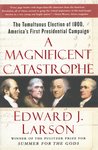
A Magnificent Catastrophe: The Tumultuous Election of 1800, America's First Presidential Campaign
Edward J. Larson
2007
"They could write like angels and scheme like demons." So begins Pulitzer Prize-winner Edward Larson's masterful account of the wild ride that was the 1800 presidential election—an election so convulsive and so momentous to the future of American democracy that Thomas Jefferson would later dub it "America's second revolution."
-
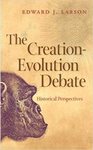
The Creation-Evolution Debate: Historical Perspectives
Edward J. Larson
2007
Few issues besides evolution have so strained Americans' professed tradition of tolerance. Few historians besides Pulitzer Prize winner Edward J. Larson have so perceptively chronicled evolution's divisive presence on the American scene. This slim volume reviews the key aspects, current and historical, of the creation-evolution debate in the United States.
-
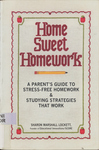
Home, Sweet Homework: A Parent's Guide to Stress-Free Homework & Studying Strategies that Work
Sharon Marshall Lockett
2007
Students today have twice as much homework as you did. That's twice as much reading. Twice as many definitions. Twice the number of math problems. It doubles the workload for your kids--and the headaches for you. Fortunately, there's Home Sweet Homework.
Getting involved with your student's homework will help them receive better grades, have a better attitude, and get accepted to better colleges. And Sharon Lockett, founder of Educational Innovations/SCORE, shows you how! She provides the tools and strategies you will need to conquer your child's bulging backpack.
Help your children do their homework--and do it right!
-
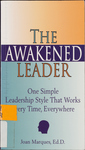
The Awakened Leader: One Simple Leadership Style that Works Every Time, Everywhere
Joan Marques
2007
Argues that leadership styles do not need to change in different contexts, thus giving readers permission to develop one style that works for every situation. Readers are instructed on the behaviors and traits necessary to become awakened leaders, such as integrity and compassion, and they are warned about common mistakes, such as being judgmental or manipulative. In-depth interviews with leaders in many settings, from corporate to nonprofit and religious to personal, reveal crucial points for leadership success as well as organizational aspects for achieving greater job performance and satisfaction. Taking into account the many recognized leadership styles discussed in business literature, Awakened Leadership is presented as the most effective, versatile style of leading.
-
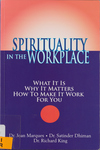
Spirituality in the Workplace: What it is, Why it Matters, How to Make it Work for You
Joan Marques, Satinder Dhiman, and Richard King
2007
Provides the tools to make your work experience a gratifying one. A common misconception equates workplace spirituality with religion in the workplace; this sets the record straight, providing a practical definition of spirit at work and explaining its benefits for employees, managers, the organization, the societies in which the organization operates, and the world at large. Whether you are a leader, a manager, or an employee who cares about the people and the place you surround yourself with, you'll find the broad focus presented here useful for improving your work and your life.
-
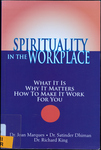
Spirituality in the Workplace: What it is, Why it Matters, How to Make it Work for you
Joan Marques, Satinder Dhiman, and Richard King Dr.
2007
Provides the tools to make your work experience a gratifying one. A common misconception equates workplace spirituality with religion in the workplace; this sets the record straight, providing a practical definition of spirit at work and explaining its benefits for employees, managers, the organization, the societies in which the organization operates, and the world at large. Whether you are a leader, a manager, or an employee who cares about the people and the place you surround yourself with, you'll find the broad focus presented here useful for improving your work and your life.--From publisher description.
-
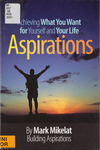
Aspirations: Achieving What You Want for Yourself and Your Life
Mark Mikelat
2007
You need Aspirations. Your Aspirations are your lifeblood. They sustain you, empower you, and give you purpose and direction in life towards ultimate happiness and fulfillment. As you need air to breathe, food to eat, and water to drink, your Aspirations, too, are a needed daily nutrient.
-
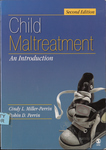
Child Maltreatment: An Introduction
Cindy L. Miller-Perrin and Robin D. Perrin
2007
Thoroughly updated and expanded, the Second Edition of Child Maltreatment: An Introduction disseminates current knowledge about the various types of violence against children. Uniquely offering both a psychological and sociological focus, this core text helps students understand more fully the etiology, prevalence, treatment, policy issues, and prevention of child maltreatment.
-
Child Maltreatment: An Introduction
Cindy L. Miller-Perrin and Robin D. Perrin
2007
Child Maltreatment, Third Edition, by Cindy Miller-Perrin and Robin Perrin, is a thoroughly updated new edition of the first textbook for undergraduate students and beginning graduate students in this field. The text is designed to provide a comprehensive introduction to child maltreatment by disseminating current knowledge about the various types of violence against children. By helping students understand more fully the etiology, prevalence, treatment, policy issues, and prevention of child maltreatment, the authors hope to further our understanding of how to treat child maltreatment victims and how to prevent future child maltreatment.
-
"In Old Friendship": The Correspondence of Lewis Mumford and Henry A. Murray, 1928-1981
Lewis Mumford, Henry A. Murray, and Frank G. Novak
2007
"Between 1928 and 1981 architectural and cultural critic Lewis Mumford exchanged nearly six hundred letters with Melville scholar and Harvard psychologist Henry A. Murray. "In Old Friendship" documents that interaction." "Covering fifty years of devoted camaraderie between two exceptional minds, the book offers insights into the intellectual frustrations behind their significant careers and the emotional needs that framed their vibrant, often dramatic lives. To Mumford, a writer who sought to change the course of world events, iconoclastic Murray became a welcome confidant, critic, mentor, and friend." "The letters reflect the wide range of public and private interests held by both men. Love's entanglements are aired alongside literary labors. By chronicling the private worlds of these intellectual icons, this volume emerges as a crucial research tool for students of American intellectual history and culture, literary criticism, urbanism, architecture, and political arenas such as World War II and the cold war. It offers a unique prism through which to observe the dramatic shifts in American society and culture in the twentieth century."--Jacket.
-
Living Brands: Collaboration + Innovation = Customer Fascination
Raymond Nadeau
2007
If you want to build and strengthen your brand in the twenty-first century, you need more than clever grassroots promotions and hip guerrilla marketing. You need Living Brands, Raymond Nadeau's dynamic, groundbreaking approach to branding that shows you, in six simple steps, how to become an integral part of your consumers' lives.
Living Brands is based on a passion for understanding consumers' lives and their existing needs. It uses the latest strategies of consumer collaboration to create a more culturally evolved, emotionally engaged, holistic connection with consumers. As one of the marketing industry's global pioneers, Raymond Nadeau has seen how the marketing world has changed. He provides examples of what works and what doesn't in today's consumer-savvy market. Packed with interviews from today's finest creative and cultural minds, he reveals six secrets to creating brands that truly fascinate and fulfill consumers' needs.