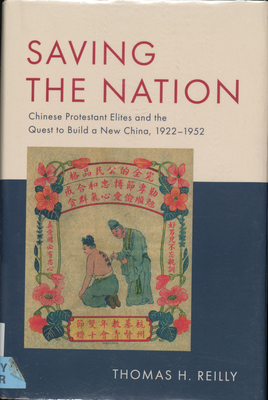
This book gallery contains monograph publications by Pepperdine University faculty members or staff. Each entry contains a link through which the user may access or purchase the publication.
-

Muslims and the State in Britain, France, and Germany
Joel S. Fetzer and J Christopher Soper
2005
"This book analyzes state accommodation of Muslims' religious practices in Britain, France, and Germany, first examining three major theories: resource mobilization, political-opportunity structure, and ideology. It then proposes an additional explanation, arguing that each nation's approach to Muslims follows from its historically based church-state institutions."--Jacket.
-
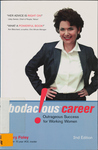
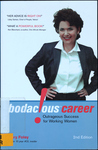
Bodac!ous Career: Outrageous Success for Working Women
Mary E. Foley
2005
If you're like most women, you sense you could be doing better. Bodacious! Career: Outrageous Success for Working Women, shows you how! Learn what it takes to build a successful career. How to thrive in constant change. How to embrace office politics. How to actively market yourself. How to know your worth. How to take a stand. How to think strategically, and act bodaciously. And much more!
-
Promising Practices for Family Involvement in Schooling Across the Continents
Diana B. Hiatt-Michael
2005
-
Introduction to Management Accounting
Charles T. Horngren, Gary L. Sundem, and William O. Stratton
2005
-
Their Lives: the Women Targeted by the Clinton Machine
Candice E. Jackson
2005
The lives of eight women who crossed romantic paths with Bill Clinton are examined.
-
Their Lives: The Women Targeted by the Clinton Machine
Candice E. Jackson
2005
Bill Clinton rose to the White House proclaiming himself a supporter of women's rights, but this shocking expose reveals a pattern of disturbing actions that render his rhetoric hollow. Combining in-depth research and first-hand accounts, Candice E. Jackson proves that Clinton used his political power to harass, intimidate and terrorize the women who got in his way. And while Jackson stops short of morally condemning the former president for his philandering, her research uncovers an undeniable link between his liberal beliefs and misogynistic behavior. It's a discovery that should concern women everywhere, given that Hillary Clinton, his eager accomplice, might one day occupy the Oval Office.
-
Student Workbook, Exploring Economics, third edition, Robert L. Sexton
Stephen Louis Jackstadt, Lee Huskey, and Robert L. Sexton
2005
-
Value-Centered Ethics: a Proactive System to Shape Ethical Behavior
Charles D. Kerns
2005
Ethical leadership is central to successful business management yet ethics has long been the domain of philosophers and theologians. Leaders and managers are eager for direction on how to establish a culture of ethical responsibility and accountability in their organizations. Kerns shows how the A-B-C Model of antecedents, behaviors and consequences can be used by managers. He describes the four roles of managerial leaders, the influencer, director, focuser, and linker and lists potential 'derailers' that can lead to ethical transgressions. Action planning worksheets, self assessment surveys and 'take away' ideas conclude the text. Includes bibliographical references and index.
-

If Looks Could Kill
Jeanne Lazo
2005
On Halloween night, four children find a dead body wearing red shoes in the local cemetery, and decide to investigate the murder when the shoes reappear a week later in a painting displayed at the local art gallery.
-
If Looks Could Kill: Teacher's Guide
Jeanne Lazo
2005
If Looks Could Kill Teacher's Guide, for grades 6-8, is packed with innovative tools to stimulate classroom discussion and get every child actively involved. Companion to If Looks Could Kill, a mystery by Jeanne Lazo for ages 10 and up, this guide helps teachers and students expand the joy of reading to a multi-dimensional learning experience.
-
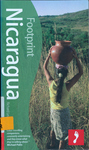
Nicaragua
Richard Leonardi
2005
Central America’s best-preserved secret. Sleepy towns and active volcanoes. Where to go and what to see. Deserted beaches and pristine rainforests. Where to eat, drink and sleep, from beach huts to elegant colonial haciendas. A nation of poets and comedians. Rum, reggae, and revolution. Full-colour maps. Kamikaze parrots, fishing bats, and iguanas that can raise the dead…
-
Hidden Treasures of the American West: Muriel H. Wright, Angie Debo, and Alice Marriott
Patricia Loughlin
2005
Scholars of the American West have largely overlooked the lives and work of three women public historians who, in the 1930s and 1940s, produced some of the most important writings about Oklahoma and the Southwest. In Hidden Treasures of the American West, Patricia Loughlin illuminates the contributions of Muriel H. Wright, Angie Debo, and Alice Marriott to the study of the West and American Indians.
Muriel Wright, an Oklahoma Choctaw, promoted Oklahoma history in her writings for the Chronicles of Oklahoma, a journal published by the Oklahoma Historical Society. Wright focused on the progress, strength, and endurance of American Indian cultures.
Angie Debo, Wright's contemporary, studied American Indian history and Oklahoma's distinct identity as a place of frontier possibilities and American Indian settlement. She participated in the larger, national discourse concerning the history of the United States and the history of the American Indians, revisiting issues she thought were misrepresented in previous accounts.
Alice Marriott, an anthropologist, was known within the discipline as a pioneer of experimental ethnography, but she never enjoyed the respect her output deserved. Marriott strove to convince collectors that Indian arts and crafts from Oklahoma were just as authentic and valuable as those from Arizona or New Mexico.
Patricia Loughlin sketches the biographies of these influential women including their significant texts that contributed greatly to Oklahoma historiography, their establishment of new methodologies, and their understanding of state and regional history, federal Indian policy, and interpretations of American Indian cultures.
-
The Constitutional Convention: A Narrative History from the Notes of James Madison
James Madison, Edward J. Larson, and Michael P. Winship
2005
In 1787, the American union was in disarray. The incompatible demands of the separate states threatened its existence; some states were even in danger of turning into the kind of tyranny they had so recently deposed. A truly national government was needed, one that could raise money, regulate commerce, and defend the states against foreign threats–without becoming as overbearing as England. So thirty-six-year-old James Madison believed. That summer, the Virginian was instrumental in organizing the Constitutional Convention, in which one of the world’s greatest documents would be debated, created, and signed. Inspired by a sense of history in the making, he kept the most extensive notes of any attendee.Now two esteemed scholars have made these minutes accessible to everyone.
-
The Constitutional Convention: a Narrative History: from the Notes of James Madison
James Madison, Edward J. Larson, and Michael P. Winship
2005
In 1787, the American union was in disarray. The incompatible demands of the separate states threatened its existence; some states were even in danger of turning into the kind of tyranny they had so recently deposed. A truly national government was needed, one that could raise money, regulate commerce, and defend the states against foreign threats-without becoming as overbearing as England. So thirty-six-year-old James Madison believed. That summer, the Virginian was instrumental in organizing the Constitutional Convention, in which one of the world's greatest documents would be debated, created, and signed. Inspired by a sense of history in the making, he kept the most extensive notes of any attendee. Now two esteemed scholars have made these minutes accessible to everyone. Presented with modern punctuation and spelling, judicious cuts, and helpful notes-plus fascinating background information on every delegate and an overview of the tumultuous times-here is the great drama of how the Constitution came to be, from the opening statements to the final votes. --Publisher.
-
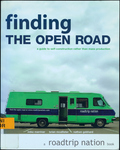
Finding the Open Road: A Guide to Self-Construction Rather than Mass Production: A Roadtrip Nation book
Mike Marriner, Brian McAllister, Nathan Gebhard, and Rob Bollinger
2005
"A compilation of the wisdom gleaned from Roadtrip Nation's informational interviews and experiences on the road, including a how-to-roadtrip guide"--Provided by publisher.
-
The Force of Tradition: Response and Resistance in Literature, Religion, and Cultural Studies
Donald G. Marshall
2005
"How do we stand in relation to everything that comes down to us from the past? Is the very idea of tradition still useful in the wake of historical ruptures such as the Holocaust, changes in the canon, and the end of colonialism? Suspicion of tradition as culturally narrow and oppressive is a persistent theme of modernity and has increased with the resurgence of religious traditionalism around the globe. At the same time, various groups demanding recognition for their distinctive cultural identity have reclaimed their traditions.""The essays in this volume offer analyses of religious, literary, and cultural traditions and both responses and resistance to them including works by Hans-Georg Gadamer, Josiah Rayes, Alasdair MacIntyre, Jacques Derrida, Charlotte Bronte, Soren Kierkegaard, Ludwig Wittgenstein, Edith Wharton, Chinua Achebe, Samuel Taylor Coleridge, Thomas Kuhn, Donald Davidson, antebellum, African-American women preachers, and Christian and Jewish thinkers in the wake of the Holocaust, among others."--Jacket.
-
Limits on States: a Reference Guide to the United States Constitution
James M. McGoldrick
2005
Delves into the modern issues pertaining to state limitations by tracing its history and looking at today's most important factors. Provides readers with a greater understanding of the U.S. Constitution by detailing the most significant limits on state power.
-
Laws Affecting Clinical Practice
Bruce Dennis Sales, Michael O. Miller, and Susan R. Hall
2005
A comprehensive, concise resource outlining the legal obligations and responsibilities of mental health professionals. Identifying legal topics affecting mental health practices and services, the authors address a wide range of legal topics, including licensing; privacy of professional information; practice laws related to families, juveniles, civil matters, and criminal matters; and limitations on and liability for practice. The laws surveyed are expressed with minimal legal jargon, making this volume maximally accessible to those outside of the legal profession. An essential introduction to clinically relevant laws for therapists and graduate students, it will help readers to become more intelligent consumers of legal services.
-
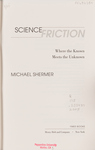
Science Friction: Where the Known Meets the Unknown
Michael Shermer
2005
In each of the essays in Science Friction, psychologist and science historian Michael Shermer explores the barriers and biases that plague and propel science, especially when scientists push against the boundaries of the unknown. As Shermer puts it, the challenge we all face in distinguishing facts from fiction can be summed up with a twist on a well-worn bromide: "I wouldn't have seen it if I hadn't believed it." What do we know and what do we not know? How does science respond to controversy, attack, and uncertainty? Together, these fourteen essays probe the omnipresent clash between the known and the unknown, always employing Shermer's trademark wit and intelligence.
-
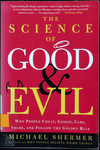
The Science of Good and Evil: Why People Cheat, Gossip, Care, Share, and Follow the Golden Rule
Michael Shermer
2005
From bestselling author Michael Shermer, an investigation of the evolution of morality that is "a paragon of popularized science and philosophy" The Sun (Baltimore) A century and a half after Darwin first proposed an "evolutionary ethics," science has begun to tackle the roots of morality. Just as evolutionary biologists study why we are hungry (to motivate us to eat) or why sex is enjoyable (to motivate us to procreate), they are now searching for the very nature of humanity. In The Science of Good and Evil, science historian Michael Shermer explores how humans evolved from social primates to moral primates; how and why morality motivates the human animal; and how the foundation of moral principles can be built upon empirical evidence. Along the way he explains the implications of scientific findings for fate and free will, the existence of pure good and pure evil, and the development of early moral sentiments among the first humans. As he closes the divide between science and morality, Shermer draws on stories from the Yanamamouml;, infamously known as the "fierce people" of the tropical rain forest, to the Stanford studies on jailers' behavior in prisons. The Science of Good and Evil is ultimately a profound look at the moral animal, belief, and the scientific pursuit of truth.
-
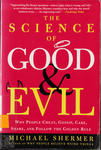
The Science of Good and Evil: Why People Cheat, Gossip, Care, Share, and Follow the Golden Rule
Michael Shermer
2005
From bestselling author Michael Shermer, an investigation of the evolution of morality that is "a paragon of popularized science and philosophy" The Sun (Baltimore) A century and a half after Darwin first proposed an "evolutionary ethics," science has begun to tackle the roots of morality. Just as evolutionary biologists study why we are hungry (to motivate us to eat) or why sex is enjoyable (to motivate us to procreate), they are now searching for the very nature of humanity. In The Science of Good and Evil, science historian Michael Shermer explores how humans evolved from social primates to moral primates; how and why morality motivates the human animal; and how the foundation of moral principles can be built upon empirical evidence. Along the way he explains the implications of scientific findings for fate and free will, the existence of pure good and pure evil, and the development of early moral sentiments among the first humans. As he closes the divide between science and morality, Shermer draws on stories from the Yanamamouml;, infamously known as the "fierce people" of the tropical rain forest, to the Stanford studies on jailers' behavior in prisons. The Science of Good and Evil is ultimately a profound look at the moral animal, belief, and the scientific pursuit of truth.
-
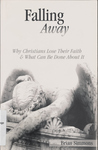
Falling Away: Why Christians Lose Their Faith & What Can be Done About It
Brian Simmons
2005
How can a son, raised in an authentically Christian home, reach adulthood and then make the choice to walk away from the faith he has learned since infancy...while his sister, raised in the same home and circumstances, grows into a sure, stable, and closely-treasured belief in God and his promises? Why do people from mixed marriages fall away from the church more often? What are the signs that an adolescent is having something more than a normal identity crisis? How can Christians respond to deep, probing questions of faith from those who are struggling, without closing the door on their return to the Christian fellowship?
Drawing on the latest sociological, psychological, and religious research - and most importantly, drawing on the wisdom of Scripture - Brian Simmons seeks to answer these and other important questions about the process, implications, and consequences of apostasy. A must-read for anyone who's ever questioned the faith - or loved someone who did.
-
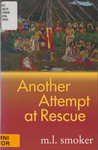
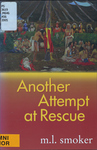
Another Attempt at Rescue
M. L. Smoker
2005
Poetry. Native American Studies. ANOTHER ATTEMPT AT RESCUE is the first collection by M.L. Smoker, whose work has garnered praise from Sherman Alexie and Jim Harrison. "M.L. Smoker's poems are tough, funny, magical, but not in a goofy way. This is blue-collar magic. Unemployed magic. Living on government cheese magic. I highly recommend this collection"--Sherman Alexie. Smoker is an Assiniboine/Sioux writer from the Fort Peck Reservation in Montana.
-
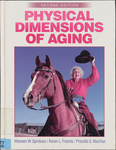
Physical Dimensions of Aging
Waneen Wyrick Spirduso, Karen L. Francis, and Priscilla G. MacRae
2005
"Physical Dimensions of Aging, Second Edition, is a landmark textbook and reference that has been completely updated and revised. It integrates research findings on physical aging from more than 100 different journals in various fields. The interdisciplinary coverage in Physical Dimensions of Aging, Second Edition, brings professionals up to date on the outcomes of the latest research and their implications for the elderly in the real world. The book discusses how people age physically and how this aging affects other dimensions of life."--Jacket.
-
El Coliseo de la Cruz, 1736-1860: Estudio y Documentos
Phillip Brian Thomason
2005
"A detailed study of the construction and history of the Coliseo de la Cruz, the first modern public theatre in Madrid, built on the site of the city's oldest permanent playhouse"--Provided by publisher.
-
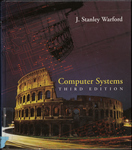
Computer Systems
J Stanley Warford
2005
"Computer Systems, Third Edition offers a step-by-step introduction to the central concepts in computer organization, assembly language, and computer architecture. It invites students to explore the many dimensions of computer systems through a top-down approach to levels of abstraction. By examining how the different levels of abstraction relate to one another, the text helps students look at computer systems and their components as a unified concept."--Jacket.
-
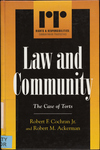
Law and Community: the Case of Torts
Robert F. Cochran and Robert M. Ackerman
2004
Cochran (Pepperdine University School of Law) and Ackerman (Pennsylvania State University's Dickinson School of Law) consider the possibilities of a communitarian tort system. In so doing they discuss communitarian principles, offer an intermediate communitarian perspective of tort law, and discuss the roles of families, religious communities, and the larger community. Annotation : 2004 Book News, Inc., Portland, OR (booknews.com).
-
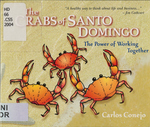
The Crabs of Santo Domingo: The Power of Working Together
Carlos A. Conejo
2004
The concepts of "helpful crabs" and "fighter crabs" are used to illustrate the power of collaboration and cooperation.
-
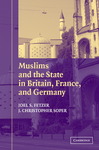
Muslims and the State in Britain, France, and Germany
Joel S. Fetzer and J. Christopher Soper
2004
European governments must struggle with assimilating Muslim newcomers into their countries, with so many more now living in Western Europe. Britain, France, and Germany have dealt with the related problems differently. This book explains why their policies differ and proposes ways of ensuring the successful incorporation of practicing Muslims into liberal democracies. Resolving their issues has become all the more urgent in the aftermath of the terrorist attacks of September 11, 2001.
-
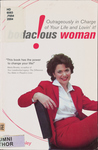
Bodac!ous Woman: Outrageously in Charge of your Life and Lovin' it!
Mary E. Foley
2004
Mary wrote this book to inspire women to be courageously in charge of their lives and lovin' them like never before. Women who were taught to be "good girls" when they were young now realize that being a good girl isn't good enough in today's fast-paced, demanding and constantly changing world. Plan B is to be bodacious. Based on personal experience, "Bodacious! Woman" offers a simple, but powerful approach to feeling alive and in charge of your life. Using fun language such as "live like your nail color" and the "bodacious woman mantra," as well as sharing both her successes and struggles, Mary is able to connect with her audience in a very authentic, attractive way.
-
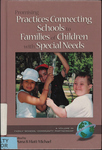
Promising Practices Connecting Schools to Families of Children with Special Needs
Diana B. Hiatt-Michael
2004
-
Revisiting Racialized Voice: African American Ethos in Language and Literature
David Glen Holmes
2004
-
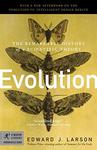
Evolution :the remarkable history of a scientific theory /
Edward J. Larson
2004
In this lively, deeply erudite work, Pulitzer Prize–winning science historian Edward J. Larson takes us on a guided tour of Darwin’s “dangerous idea,” from its theoretical antecedents in the early nineteenth century to the brilliant breakthroughs of Darwin and Wallace, to Watson and Crick’s stunning discovery of the DNA double helix, and to the triumphant neo-Darwinian synthesis and rising sociobiology today.
-
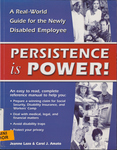
Persistence is Power!: A Real-World Guide for the Newly Disabled Employee
Jeanne Lazo and Carol J. Amato
2004
Newly disabled? Yes. Powerless? Not anymore!
Persistence is Power! is a complete, nationwide disability resource to help you through the entire disability process. Packed with step-by-step-instructions, checklists, forms, examples, answers to FAQs, Internet sites and other resources, this book is a must-read for newly disabled employees, their caregivers, and anyone who works for organizations that serve them.
Persistence is Power! provides information about all three of the major disability benefit plans (Social Security, Disability Insurance, and Workers Compensation) as well as other benefits. Written in simple language, with headings and key words in blue, readers can quickly locate and easily understand the information they need.
Learn how to develop your own coping strategy; decide if long-term disability is right for you; determine eligibility for disability benefits; gather evidence and prepare a winning claim; manage paperwork; deal with financial, medical, legal, and privacy issues; and avoid common disability traps. Armed with real-world facts, you'll be back in the drivers seat, making informed decisions that affect you and your family/loved ones.
-
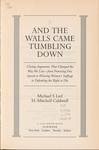
And the Walls Came Tumbling Down: Closing Arguments that Changed the Way we Live, from Protecting Free Speech to Winning Women's Suffrage to Defending the Right to Die
Michael S. Lief and H Mitchell Caldwell
2004
A collection of closing arguments from eight landmark trials spanning 250 years of American history, all of which redefined civil rights in the United States and profoundly impacted society.
-

Putting Faith in Partnerships: Welfare-to-Work in Four Cities
Stephen V. Monsma and John J. Dilulio Jr.
2004
The first major work to examine welfare-to-work programs and their implications for public policy.
-
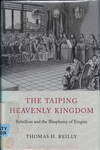
The Taiping Heavenly Kingdom: Rebellion and the Blasphemy of Empire
Thomas H. Reilly
2004
"In this study, Reilly emphasizes the Christian elements of the Taiping faith, showing how Protestant missionaries built on earlier Catholic efforts to translate Christianity into a Chinese idiom. Prior studies of the rebellion have failed to appreciate how Hong Xiuquan's interpretation of Christianity connected the Taiping faith to an imperial Chinese cultural and religious context." "This book makes a major contribution to the study of the Taiping Rebellion and to our understanding of the ideology of both the rebels and the traditional imperial system they opposed. It will appeal to scholars in the fields of Chinese history, religion, and culture and of Christian theology and church history."--Jacket
-
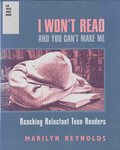
I Won't Read and You Can't Make Me: Reaching Reluctant Teen Readers
Marilyn Reynolds
2004
Marilyn Reynolds has brought many disaffected, school-hostile, and wholly unmotivated students into the ranks of lifelong readers. In this concise, practical book, she shares techniques she has used and personal anecdotes that reveal much about reluctant readers and teachers who struggle daily to engage them. In addition to insightful analysis, Reynolds devotes a good portion of her book to practical, immediately usable resources, including answers to frequently asked questions, prompts for teaching, and a separate section of "Tricks of the Trade" with logs, forms, an extensive list of "hit" books, and much more.