This book gallery contains monograph publications by Pepperdine University faculty members or staff. Each entry contains a link through which the user may access or purchase the publication.
-

Wearing the Spider
Susan Schaab
2007
A high-tech thriller about a female attorney who gets caught in a web of sexual harassment, identity theft, and political intrigue.
-

Wearing the Spider
Susan Schaab
2007
Sexual Harassment, Identity Theft, and Political Intrigue in one High-Tech Legal Thriller. It starts with a simple unwanted kiss and evolves into a labyrinthine trail of forgery and illusion. A lawyer's identity is hijacked and misused by a ruthless partner of her Manhattan law firm who engages in email impersonation, political gamesmanship and electronic forgery to set her up as the mastermind of an illegal scheme that ultimately leads to murder. She embarks on a clandestine investigation while dodging the FBI, risking her life as well as her career.
-
The SPELIT Power Matrix: Untangling the Organizational Environment with the SPELIT Leadership Tool
June H. Schmieder-Ramirez and Leo A. Mallette
2007
"The SPELIT power matrix is a leadership tool for untangling the organizational environment from a social, political, economic, legal, intercultural, and technical view."--Booksurge website
-
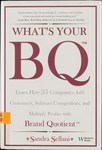
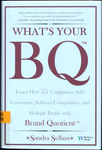
What's Your BQ?: Learn How 35 Companies Add Customers, Subtract Competitors, and Multiply Profits with Brand Quotient
Sandra Sellani
2007
More than 100 books have been written on branding, but none of them take you through a step-by-step process of building a brand. Most business leaders are overwhelmed with the day-to-day operations of running a business and view branding as something that should be left to the marketing department. But in fact, branding is inextricably linked to strategy and the leader of the organization must be the brand champion. This book is the only one of its kind that addresses the link between strategy and brand by using an evaluation tool (the BQ Test) and by teaching clients how to build a strategy-based brand. The book also uses the powerful VRIO Model introduced by Dr. Jay Barney of Ohio State University to give companies a practical way to determine their true points of differentiation and sustainable competitive advantage in an environment of increasing complexity and competition.
-

The Heartbreakers
Pamela Wells
2007
When three high school friends experience breakups on the same night, a fourth writes "The Break up Code," which all agree to follow as they try to get over the bad relationships and get back in touch with themselves and one another.
-
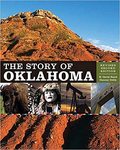
The Story of Oklahoma
W. David Baird and Danney Goble
2006
From the tectonic formation of Oklahoma’s varied landscape to the recovery and renewal following the Oklahoma City bombing, this readable book includes both the well-known and the not-so-familiar of the state’s people, events, and places. W. David Baird and Danney Goble offer fresh perspectives on such widely recognized history makers as Sequoyah, the 1889 Land Run, and the Glenn Pool oil strike. But they also give due attention to Black Seminole John Horse, Tulsa’s Greenwood District, Coach Bertha Frank Teague’s 40-year winning streak with the Byng Lady Pirates, and other lesser-known but equally important milestones. The result is a rousing, often surprising, and ever-fascinating story.
-
Don't Get Scrooged: How to Thrive in a World Full of Obnoxious, Incompetent, Arrogant, and Downright Mean-Spirited People
Richard Carlson
2006
Presents sixty ways to guard against stressful elements and dysfunctional people during the holiday season.
-
Don't Get Scrooged: How to Thrive in a World Full of Obnoxious, Incompetent, Arrogant, and Downright Mean-Spirited People
Richard Carlson
2006
Presents sixty ways to guard against stressful elements and dysfunctional people during the holiday season. Don't Get Scrooged is a jewel of a handbook on how to avoid, appease, and even win over the Scrooges who haunt your holidays. Whether it's the salesclerk who ignores you in favor of her cell phone, the customer who knowingly jumps ahead of you in line at Starbucks, the unnaturally irritable boss down the hall, or the in-laws who invite themselves (every year) for a two-week stay at your house, you will always need to deal with Scrooges, grumps, uninvited guests, sticks-in-the-mud, and supreme party poopers. Learning to handle them whenever and wherever they appear is not just optional—it's essential.
-
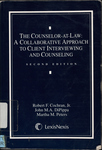
The Counselor-at-Law: A Collaborative Approach to Client Interviewing and Counseling
Robert F. Cochran Jr., John M A DiPippa, and Martha M. Peters
2006
-
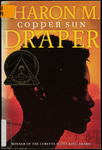
Copper Sun
Sharon M. Draper
2006
Two fifteen-year-old girls--one a slave and the other an indentured servant--escape their Carolina plantation and try to make their way to Fort Moses, Florida, a Spanish colony that gives sanctuary to slaves.
-
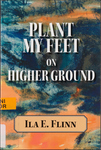
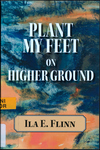
Plant My Feet on Higher Ground
Ila E. Flinn
2006
From prankster to preacher? Just start in the Galveston Storm, September 1900. That will lead you back to 1857 and your parents for the most unusual of three love stories in this history.
-
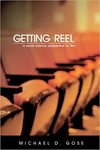
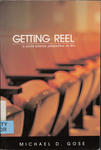
Getting Reel: A Social Science Perspective on Film
Michael D. Gose
2006
This book is an easy-to-read, fun and provocative discussion of how to understand, appreciate, and evaluate film. Written by professor and film guru Michael Gose, the book is loved by students and moviegoers alike. Michael Gose masterfully raises key questions and examples that illuminate perspectives and issues raised in film. The style is both educational and highly entertaining. The work has received rave reviews. For example, Dr. Robert K. Johnson rates the book "a gold mine of wide-ranging questions and critical perspectives that together help viewers unpack a movie's power and meaning." This book is a masterful achievement that allows the reader to truly engage in the film experience.
-
The La Brea Tar Pits: A Field Trip & Self-Study Guide; Understanding the Past & Critical Thinking
Allen W. Jang and William S. Weston
2006
A review of the theories surrounding the deposit of animal carcasses in the tar pits, including the fluvial transport theory adopted by some Creationists (i.e.: deposit by flood waters). According to the traditional view, the La Brea Tar Pits were pools of entrapment for unwary animals. This view fails to account for a variety of anomalies, including the disarticulation and intermingling of skeletal parts, the lack of teeth marks on herbivore bones, the absence of soft tissues, the inverse ratio of carnivores to herbivores, the numerical superiority of water beetles among insect species, and water saturation of wood debris. An alternative theory assuming a catastrophic flood is a better explanation of the data. This theory can apply to other late Pleistocene fossil sites, where similar anomalies occur. Fossil deposition by catastrophic flood seems to be global in scope. These considerations provide strong confirmation for the young Earth-Flood model of geologic history.
-
The La Brea Tar Pits: a field trip & self-study guide; understanding the past & critical thinking
Allen W. Jang and William S. Weston
2006
-

God's New Whiz Kids?: Korean American Evangelicals on Campus
Rebecca Y. Kim
2006
"God's New Whiz Kids? focuses on second-generation Korean Americans, who make up the majority of Asian American evangelicals, and explores the factors that lead college-bound Korean American evangelicals - from integrated, mixed race neighborhoods - to create racially segregated religious communities on campus. Kim illuminates an emergent "made in the U.S.A." ethnicity to help explain this trend, and to shed light on a group that may be changing the face of American evangelicalism."--BOOK JACKET.
-
Summer for the Gods: The Scopes Trial and America's Continuing Debate over Science and Religion
Edward J. Larson
2006
In the summer of 1925, the sleepy hamlet of Dayton, Tennessee, became the setting for one of the 20th century's most contentious dramas: the Scopes trial that pit William Jennings Bryan and the anti-Darwinists against a teacher named John Scopes into a famous debate over science, religion, and their place in public education.
In the summer of 1925, the sleepy hamlet of Dayton, Tennessee, became the unlikely setting of one of our century's most contentious dramas: the Scopes trial and the debate over science, religion, and their place in public education. This ”trial of the century” not only cast Dayton into the national spotlight, it epitomized America's ongoing struggle between individual liberty and majoritarian democracy.Now, with this authoritative and engaging book, Edward J. Larson examines the many facets of the Scopes trial and shows how its enduring legacy has crossed religious, cultural, educational, and political lines.The ”Monkey Trial,” as it was playfully nicknamed, was instigated by the American Civil Liberties Union to challenge a controversial Tennessee law banning the teaching of human evolution in public schools. The Tennessee statute represented the first major victory for an intense national campaign against Darwinism, launched in the 1920s by Protestant fundamentalists and led by the famed politician and orator William Jennings Bryan. At the behest of the ACLU, a teacher named John Scopes agreed to challenge the statute, and what resulted was a trial of mythic proportions. Bryan joined the prosecutors and acclaimed criminal attorney Clarence Darrow led the defense—a dramatic legal matchup that spurred enormous media attention and later inspired the classic play Inherit the Wind. The Scopes trial marked a watershed in our national discussion of science and religion. In addition to symbolizing the clash between evolutionists and creationists, the trial helped shape the development of both popular religion and constitutional law in America, serving as a precedent for more recent legal and political battles. With new archival material from both the prosecution and the defense, paired with Larson's keen historical and legal analysis, Summer for the Gods is poised to become a new classic on a pivotal milestone in American history.
-
Built to Change: How to Achieve Sustained Organizational Effectiveness
Edward E. Lawler and Christopher G. Worley
2006
"In this book, organizational effectiveness experts Edward Lawler and Christopher Worley show how organizations can be "built to change" so they can last and succeed in today's global economy. Instead of striving to create a highly reliable Swiss watch that consistently produces the same behavior, they argue organizations need to be designed in ways that stimulate and facilitate change." "Built to Change focuses on identifying practices and designs that organizations can adopt so that they are able to change. Built to Change is filled with illustrative examples from companies - Procter & Gamble, Johnson & Johnson, Limited Brands, and Toyota - that have been able to change time and again to meet changing business demands. The book outlines what it takes to become an organization that continuously and rapidly changes. It includes information about creating strategies, structures, reward systems, communication processes, and human resource management practices that are designed to facilitate the ability of an organization to change. Built to Change includes an online instructor's guide."--Jacket.
-
The Devil's Advocate: Greatest Closing Arguments in Criminal Law
Michael S. Lief and H Mitchell Caldwell
2006
"In The Devil's Advocates, Michael S. Lief and H. Mitchell Caldwell turn to the dramatic crimes and trials of criminal law. The eight famous cases in this riveting collection have set historical precedents and illuminated fundamentals of the American criminal justice system. Future president John Adams illustrates the principle that even the most despised and vilified criminal is entitled to a legal defense in the argument he delivers on behalf of the British soldiers who shot and killed five Americans during the Boston Massacre. Clarence Darrow provides a ringing defense of a black family charged with using deadly force after defending themselves from a violent mob - an argument that refines the concept of self-defense. And perhaps the best-known case is that of Ernesto Miranda, the accused rapist whose trial led to the critically important Miranda decision, which underpins procedure at every criminal arrest. Each case presented is given legal and cultural context, including a brief historical introduction, biographical sketches of the attorneys involved, highlights of trial testimony, analysis of the closing arguments and a summary of the trial's impact on its participants and our country. In clear, jargon-free prose, the authors make these pivotal cases come to vibrant life for every reader."--Publisher's website.Documents eight key trials involving such subjects as a confessed rapist who was not read his Miranda rights, a congressman's controversial use of a temporary insanity defense, and a single mother's protest against a warrant-less police search of her home.
-
Faith, Hope, and Jobs: Welfare-to-Work in Los Angeles
Stephen V. Monsma and J Christopher Soper
2006
A front-burner issue on the public policy agenda today is the increased use of partnerships between government and nongovernmental entities, including faith-based social service organizations. In the wake of President Bush's faith-based initiative, many are still wondering about the effectiveness of these faith-based organizations in providing services to those in need, and whether they provide better outcomes than more traditional government, secular nonprofit, and for-profit organizations. In Faith, Hope, and Jobs, Stephen V. Monsma and J. Christopher Soper study the effectiveness of 17 diff.
-
Done Deal: Your Guide to Merger and Acquisition Integration
M. Beth Page
2006
"When is the Deal Done?" The greatest barrier to successful integration is cultural incompatibility. Undervaluing or ignoring the human dynamics related to an M&A transaction can prompt the departure of key talent that was among the assets that made the acquisition attractive to the buyer in the first place. The importance of an organization s culture, particularly as a risk factor in M&A integration, cannot be underestimated. Harvard researchers report that firms that managed their culture realized a nearly seven-fold increase in revenue, compared with only 166% for firms that did not manage culture. You will discover how using transition teams, an integration manager, and a comprehensive employee communications strategy rank among the best practices in the 5C Integration Model for strengthening your M&A Integration the 5C Self Assessment workbook for your M&A planning the importance of the human dimension to overall M&A success.
-
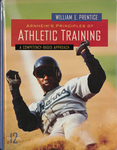
Arnheim's Principles of Athletic Training: A Competency-Based Approach
William E. Prentice and Daniel D. Arnheim
2006
Illustrated by numerous black and white photographs, this classic textbook introduces the principles trainers should follow to help athletes avoid injury, explains tissue susceptibility to sports trauma, and describes the anatomy and musculoskeletal injuries that can occur to each region of the body. The twelfth edition adds material on stretching, ephedrine, low carbohydrate diets, and headgear.
-
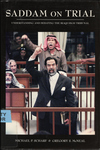
Saddam on Trial: Understanding and Debating the Iraqi High Tribunal
Michael P. Scharf and Gregory S. McNeal
2006
"Saddam Hussein. Derided as "the Butcher of Baghdad," he was charged with the most serious crimes known to mankind. On October 19, 2005, the ruthless Iraqi leader and seven of his henchmen began a legal battle of epic proportions, with their lives literally in the balance. The first of several planned trials before the Iraqi High Tribunal focused on the destruction of the town of Dujail and the torture and murder of its inhabitants in retaliation for a 1982 failed assassination attempt. Billed by the international media as "the real trial of the century," the televised proceedings were punctuated by gripping testimony of atrocities, controversial judicial rulings, assassinations of defense counsel, resignation of judges, scathing outbursts, allegations of mistreatment, hunger strikes, and even underwear appearances. Was it a mistake to try Saddam in Baghdad before a panel of Iraqi judges? Was the Iraqi High Tribunal a legitimate judicial institution? Were the proceedings fundamentally fair? Did the judges react properly to the defendants' attempts to derail the proceedings? Did the Prosecution prove its case? Did Saddam have any valid defenses? What precedents did this extraordinary trial set? Saddam on Trial: Understanding and Debating the Iraqi High Tribunal provides the reader with a thorough understanding of these and a host of other issues related to the Saddam Trial. The text offers a series of essays, in which leading international and criminal law experts discuss and debate more than thirty discrete questions raised by the trial. The book also includes a psychological profile of Saddam Hussein, a chronology of events related to the charges, a glossary of key legal terms, a synopsis of the charges and applicable law, a summary of the evidence and testimony, an analysis of the judgment, and English translations of the Tribunal's Statute, Rules, and other relevant instruments. Saddam on Trial is designed for law students, undergraduates, academics, journalists, and general readers. The book will be useful as a supplement for any law school course on International Law, International Criminal Law, International Humanitarian Law, or National Security Law. It is also suitable for undergraduate Foreign Relations, Public Policy, or Criminal Justice courses. An accompanying Teacher's Guide contains suggested questions and answers, debates, simulations, and role play exercises designed to facilitate use of the book as a teaching tool."--Publisher's website.
-
Awakening the Workplace: Achieving Connection, Fulfillment and Success at Work
Kathy Glover Scott and Adele Alfano
2006
Increasingly, people are seeing themselves in a new light in relation to their work, expressing higher expectations for achieving connection, fulfillment, and success. At the same time, the workplace is constantly evolving, creating a need for new approaches and strategies to create environments in which people work more effectively together to achieve lasting results. In short, both as individuals and teams, we seek to be fully alive in our work—finding personal meaning and creating stellar growth for our organizations. Awakening the Workplace is the seventh book in the popular Experts Who Speak book series. In this volume, we are proud to offer the collective wisdom, experience, and knowledge of 16 top speakers, coaches, and consultants from across North America and Australia. Each is a specialist in workplace issues and innovation—with proven results. Where else can you find this essential information in one book? In this volume, you’ll learn how to: • Focus your actions to achieve exponential results • Awaken the leader within • Unleash spiritual passion at home and work • Create an authentic workplace • Activate innovative leadership strategies • Integrate your work and life in a winning way • Boost your change resilience • Ride smoothly when the road gets bumpy • Defeat the energy crisis in the workplace You are holding in your hands a unique gold mine of essential information, strategies and expertise directed to awaken your limitless potential and enable a progressive, thriving workplace. The choice is yours—to remain where you are or move forward…
-
Marketing to Hispanics: A Strategic Approach to Assessing and Planning Your Initiative
Terry J. Soto
2006
For many companies already targeting this lucrative market segment and for those who are considering it, success is not always guaranteed. Even companies with a reputation for well-planned and implemented marketing programs often fail to do the upfront homework, apply the necessary analytical frameworks, and set the foundation; often resulting in false starts and initiatives that do not achieve the necessary internal traction necessary for a successful and sustainable strategy.
In Marketing to Hispanics: A Strategic Approach to Assessing and Planning Your Initiative, Terry Soto provides an in-depth view of the strategic planning process companies need to apply to effectively create market entry strategies that are in sync with not only the environment in which companies compete for a share of this market but also with their strategic, operational and organizational goals and metrics. Terry Soto's book provides a practical, systematic approach to preparing your company to target and serve Hispanic America and to set realistic goals by which to measure your success. -
The Big Red Book of Spanish Vocabulary: 30,000 Words Including Cognates, Roots, and Suffixes
Scott Thomas
2006
Presents a collection of over 30,000 Spanish words and their definitions, including cognates, roots, prefixes, and suffixes, with over 14,000 terms group by word root.
-
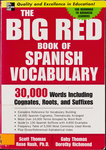
The Big Red Book of Spanish Vocabulary: 30,000 Words Including Cognates, Roots, and Suffixes
Scott Thomas
2006
The Big Red Book of Spanish Vocabulary is much, much more than a Spanish vocabulary reference! This unique and complete resource combines three complementary approaches to vocabulary building―cognates, root families, and suffixes―to instantly increase word familiarity and aid memorization.
Whether for active face-to-face communication or passive comprehension of written or spoken words, in-depth knowledge of vocabulary is the key to foreign language mastery. The Big Red Book of Spanish Vocabulary makes acquiring this mastery simpler and more straightforward than ever.
-

Finding the Life You've Been Looking For
H Norman Wright
2006
Everyone envisions a better life for themselves and their family. But daily demands soon take over the hope of a different way. H. Norman Wright, bestselling author and noted Christian counselor, renews hope for readers with the assurance that the simpler life they want is in reach when they define success in meaningful terms, simplify all areas of work and home, create balanced priorities and downscale, release emotional baggage, and set up a personal plan.
Loaded with sound advice and user-friendly suggestions, Finding the Life You've Been Looking For will guide readers toward making manageable changes to their pace, expectations, activities, relationships, possessions, and spiritual life in order to achieve the life of their dreams.
-

Star Wars, the Cestus Deception: (A Clone Wars Novel)
Steven Barnes
2005
Jedi master, Obi-Wan Kenobi goes to the planet Ord in order to persuade the manufacturer not to export the powerful battle droids to the Confederacy, but discovers that he is not the only one pursuing them.
-

Star Wars, the Cestus Deception: a Clone Wars novel
Steven Barnes
2005
Jedi master, Obi-Wan Kenobi goes to the planet Ord in order to persuade the manufacturer not to export the powerful battle droids to the Confederacy, but discovers that he is not the only one pursuing them.
-

Family Violence Across the Lifespan: an Introduction
Ola W. Barnett, Cindy L. Miller-Perrin, and Robin D. Perrin
2005
"A thoroughly updated and expanded new edition of the bestseller, Family Violence Across the Lifespan, Second Edition helps students achieve a deeper understanding of the methodology, etiology, prevalence, treatment, and prevention of family violence. Research from experts in the fields of psychology, sociology, criminology, and social welfare is woven together to provide broad coverage of current viewpoints and debates within the field of domestic violence study. Practice and policy considerations provide new and welcome perspectives, and in addition, informal interviews with leading authorities in the field of violence add depth and clarity to the topics. Organized chronologically, chapters cover child physical, sexual, and emotional abuse; courtship violence and date rape; spouse abuse, battered women, and batterers: and elder abuse." "Family Violence Across the Lifespan, Second Edition offers a comprehensive and accessibly written introduction that is ideal for use in undergraduate and master's level courses in family violence, domestic violence, and abuse offered in departments of sociology, psychology, social work, counseling, and criminal justice."--Jacket.
-

Pepperdine University, Strengthening Lives for Purpose, Service and Leadership
Andrew K. Benton
2005
-

Changing Lanes: A New Adult's Guide to Understanding Your Lane in Life
Tonia N. East
2005
Provocative and deeply uplifting, Changing Lanes fulfills a purpose as a strong, spiritually directed guide for those who face one of life’s greatest challenges: learning about self and one’s unique purpose in life. Changing Lanes has been well received by readers in various stages of life, especially those in transition. Whether it is a career change, marriage, divorce, graduation, or promotion, change is inevitable at any age. Changing Lanes is unique in that it addresses many of the issues people face, in a way that relates directly to their experience.
-

Muslims and the State in Britain, France, and Germany
Joel S. Fetzer and J. Christopher Soper
2005
European governments must struggle with assimilating Muslim newcomers into their countries, with so many more now living in Western Europe. Britain, France, and Germany have dealt with the related problems differently. This book explains why their policies differ and proposes ways of ensuring the successful incorporation of practicing Muslims into liberal democracies. Resolving their issues has become all the more urgent in the aftermath of the terrorist attacks of September 11, 2001.