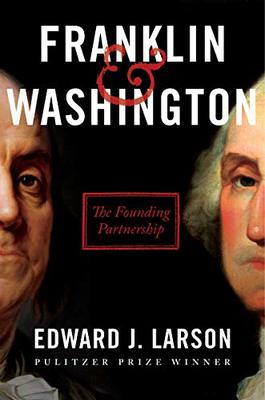
This book gallery contains monograph publications by Pepperdine University faculty members or staff. Each entry contains a link through which the user may access or purchase the publication.
-
Breaking the Zero-Sum Game: Transforming Societies Through Inclusive Leadership
Aldo Boitano, Raúl Lagomarsino Dutra, and H. Eric Schockman
2017
Escaping the win-lose dynamics of zero-sum game approaches is crucial for finding integrated, inclusive solutions to complex issues. This book uncovers real-life examples of inclusive leaders that have broken the zero-sum game, providing insights that help the reader develop their inclusive leadership skills.
-
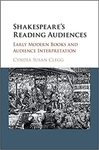
Shakespeare's Reading Audiences: Early Modern Books and Audience Interpretation
Cyndia Susan Clegg
2017
This study grows out of the intersection of two realms of scholarly investigation - the emerging public sphere in early modern England and the history of the book. Shakespeare's Reading Audiences examines the ways in which different communities - humanist, legal, religious and political - would have interpreted Shakespeare's plays and poems, whether printed or performed. Cyndia Susan Clegg begins by analysing elite reading clusters associated with the Court, the universities, and the Inns of Court and how their interpretation of Shakespeare's Sonnets and Henry V arose from their reading of Italian humanists. She concludes by examining how widely held public knowledge about English history both affected Richard II's reception and how such knowledge was appropriated by the State. She also considers The Merry Wives of Windsor, Henry V, and Othello from the point of view of audience members conversant in popular English legal writing and Macbeth from the perspective of popular English Calvinism.
-
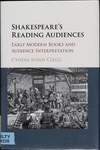
Shakespeare's Reading Audiences: Early Modern Books and Audience Interpretation
Cyndia Susan Clegg
2017
This study grows out of the intersection of two realms of scholarly investigation - the emerging public sphere in early modern England and the history of the book. Shakespeare's Reading Audiences examines the ways in which different communities - humanist, legal, religious and political - would have interpreted Shakespeare's plays and poems, whether printed or performed. Cyndia Susan Clegg begins by analysing elite reading clusters associated with the Court, the universities, and the Inns of Court and how their interpretation of Shakespeare's Sonnets and Henry V arose from their reading of Italian humanists. She concludes by examining how widely held public knowledge about English history both affected Richard II's reception and how such knowledge was appropriated by the State. She also considers The Merry Wives of Windsor, Henry V, and Othello from the point of view of audience members conversant in popular English legal writing and Macbeth from the perspective of popular English Calvinism.
-
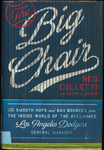
The Big Chair: the Smooth Hops and Bad Bounces from the Inside World of the Acclaimed Los Angeles Dodgers General Manager
Ned Colletti and Joseph A. Reaves
2017
"Ned Colletti is a baseball treasure with fascinating stories to tell from inside the game. The Big Chair is your all-access pass. After reading this book, you will not only understand the job of a general manager better but also the game of baseball itself." 'Tom Verducci, author of The Cubs Way and co-author of The Yankee Years "A fascinating behind-the-scenes account of his 35 years working in the front office of the Cubs, Giants and Dodgers...More than anything, Colletti shows how being a GM is a 24/7 thrill ride." 'Chicago Tribune An unprecedented, behind-the-scenes look at the career of famed former Los Angeles Dodgers General Manager (a position also known as "The Big Chair"), whose tenure spanned nine of the most exciting and turbulent years in the franchise's history. During his tenure with the Dodgers, Colletti had the highest winning percentage of any general manager in the National League. In The Big Chair, (co-authored by Joseph A. Reaves) he lets readers in on the real GM experience from his unique vantage point--sharing the inner workings of three of the top franchises in the sport, revealing the out-of-the-headlines machinations behind the trades, the hires and the deals; how the money really works; how the decision-making really works; how much power the players really have and why--the real brass tacks of some of the most pivotal decisions made in baseball history that led to great success along with heartbreak and failure on the field. Baseball fans will come for the grit and insight, stay for the heart, and pass it on for the wisdom. Ned Colletti began his MLB career with his beloved hometown team, the Chicago Cubs, more than 35 years ago. He worked in Chicago for a dozen years and was in the front office when the Cubs won the National League East in 1984 and 1989, after which he moved on as director of baseball operations for the SF Giants. By 1996, he became the Assistant GM for the Giants, before being hired as the GM in Los Angeles in 2006. There he oversaw the Dodgers through the highly publicized and acrimonious divorce battle between Frank and Jamie McCourt that culminated in the equally highly publicized sale of the team. He was present at the press conference where Don Mattingly, having just watched his team eliminated from the playoffs, used the post-season conference to vehemently discuss his lack of a contract extension. He brought marquee names like Greg Maddux and Clayton Kershaw to LA, as well as marquee drama with the likes of Manny Ramirez and Yasiel Puig; hired future Hall of Famer Joe Torre as manager; and oversaw fourteen Dodgers playoff wins. And these are just a few of the highlights. Colletti serves up a huge dish of first-hand experiences with some of the biggest names in baseball history (Barry Bonds, Greg Maddux, Don Mattingly, Don Zimmer, Tommy Lasorda, Scott Boras, Vin Scully, and more). From his humble early years living in a Chicago garage to his path to one of the most prestigious positions in professional sports, his very public and illustrious career has left a permanent handprint in the history of America's sport'and now he's ready to share the insight only those who have sat in The Big Chair have ever seen.
-

The Big Chair: The Smooth Hops and Bad Bounces from the Inside World of the Acclaimed Los Angeles Dodgers General Manager
Ned Colletti and Joseph A. Reaves
2017
During his tenure with the Dodgers, Colletti had the highest winning percentage of any general manager in the National League. In The Big Chair (coauthored by Joseph A. Reaves), he lets listeners in on the real GM experience - something no one in the position has ever done before - sharing the inner workings of three of the top franchises in the sport, revealing the out-of-the-headlines machinations behind the trades, the hires and the deals; how the money really works; how the decision making really works; how much power the players really have and why - the real brass tacks of some of the most pivotal decisions made in baseball history that led to great success along with heartbreak and failure on the field. Baseball fans will come for the grit and insight, stay for the heart, and pass it on for the wisdom.
-
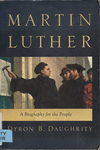
Martin Luther: A Biography for the People
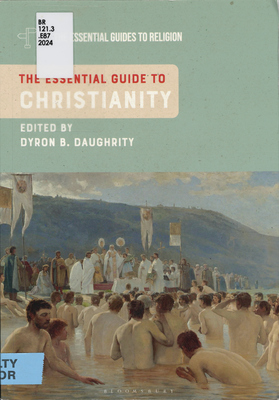
Dyron B. Daughrity
2017
"Martin Luther is a fresh retelling of one the most significant figures of the last millennium. Not written primarily for theologians, but rather for a general audience, Martin Luther traces Luther's early development, his conflicts with civic and religious authorities, his leadership of reform in Germany, and the subsequent impact of Luther's writings and beliefs as they stretched around the world."--Publisher
-
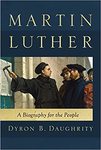
Martin Luther: A Biography for the People
Dyron B. Daughrity
2017
"I will not recant anything.''
Martin Luther: A Biography for the People is a fresh retelling of one the most significant figures of the last millennium. Not written primarily for theologians, but rather for a general, twenty-first-century audience, Martin Luther traces- Luther's early life, education, years as a monk, and teaching career
- Luther's conflicts with political and religious authorities
- Luther's 95 Theses and his narrow escape from death in the aftermath
- Luther's soaring gifts yet his unsettling flaws
- Luther's impact on our world today, from Bible translation to anti-Semitism
-
Hope in the Age of Climate Change: Creation Care This Side of the Resurrection
Chris Doran
2017
It is difficult to be hopeful in the midst of daily news about the effects of climate change on people and our planet. While the Christian basis for hope is the resurrection of Jesus, unfortunately far too many American Protestant Christians do not connect this belief with the daily witness of their faith. This book argues that the resurrection proclaims a notion of hope that should be the foundation of a theology of creation care that manifests itself explicitly in the daily lives of believers. Christian hope not only inspires us to do great and courageous things but also serves as a critique of current systems and powers that degrade humans, nonhumans, and the rest of creation and thus cause us to be hopeless. Belief in the resurrection hope should cause us to be a different sort of people. Christians should think, purchase, eat, and act in novel and courageous ways because they are motivated daily by the resurrection of Jesus. This is the only way to be hopeful in the age of climate change.
-
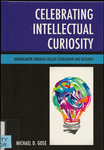
Celebrating Intellectual Curiosity: Kindergarten through College Scholarship and Research
Michael D. Gose
2017
Celebrating Intellectual Curiosity: Kindergarten Through College Scholarship and Research broadens the perspective on academic pursuits. Curiosity needs to be cultivated at all school levels. All formats of scholarship and research contribute to increased human understanding.
-
On Faith and Science
Edward J. Larson and Michael Ruse
2017
Throughout history, scientific discovery has clashed with religious dogma, creating conflict, controversy, and sometimes violent dispute. In this enlightening and accessible volume, distinguished historian and Pulitzer Prize–winning author Edward Larson and Michael Ruse, philosopher of science and Gifford Lecturer, offer their distinctive viewpoints on the sometimes contentious relationship between science and religion. The authors explore how scientists, philosophers, and theologians through time and today approach vitally important topics, including cosmology, geology, evolution, genetics, neurobiology, gender, and the environment. Broaching their subjects from both historical and philosophical perspectives, Larson and Ruse avoid rancor and polemic as they address many of the core issues currently under debate by the adherents of science and the advocates of faith, shedding light on the richly diverse field of ideas at the crossroads where science meets spiritual belief.
-
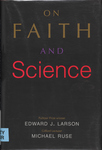
On Faith and Science
Edward J. Larson and Michael Ruse
2017
"Throughout history, scientific discovery has interacted with religious belief, creating comment, controversy, and sometimes violent dispute. In this enlightening and accessible volume, distinguished historian and Pulitzer Prize-winning author Edward Larson joins forces with Michael Ruse, philosopher of science and Gifford Lecturer, to offer distinctive perspectives on the sometimes contentious, sometimes conciliatory, and always complex relationship between science and religion. The authors explore how scientists, philosophers, and theologians through time approached vitally important topics, including cosmology, geology, evolution, genetics, neurobiology, gender, and the environment. Broaching their subjects from both historical and philosophical perspectives and taking a global, cross-cultural approach, Larson and Ruse avoid rancor and polemic as they address many of the core issues currently under debate by the adherents of science and the advocates of faith. In so doing, they shed new light on the richly diverse field of ideas at the crossroads where science meets spiritual belief"--Jacket.
-
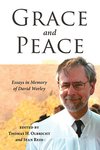
Grace and Peace: Essays in Memory of David Worley
Thomas H. Olbricht, Stan Reid, and David Ripley Worley
2017
These essays are presented by the family, friends, and colleagues of David Worley of blessed memory. David Worley was an extraordinary man of many talents and interests. David was born and raised in Texas, and was educated at Abilene Christian and Yale. Upon receiving a PhD in New Testament, he and his growing family moved to Austin, Texas, where he lived until his untimely death by cancer. David's family owned a series of broadcasting stations. Over his lifetime he was interested in the media, venture capital investments, church life and music, and mission efforts in Russia, Africa, New Zealand, and elsewhere. He taught courses as an adjunct professor at various colleges and served as president of the Austin Graduate School of Theology and chairman of the board of the Institute of Theology and Christian Ministry, St. Petersburg, Russia. Even his close friends knew little of the magnitude of his activities. What was clear, however, was that he served one Lord--the Father, Son, and Holy Spirit. Nothing can be more challenging to a complacent life than these essays about the activities and commitments of David Worley.
-
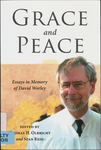
Grace and Peace: Essays in Memory of David Worley
Thomas H. Olbricht, Stan Reid, and David Ripley Worley Jr.
2017
Grace and Peace: Essays in Memory of David Worley by Thomas H. Olbricht (2017).
-
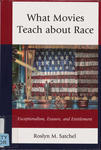
What Movies Teach About Race: Exceptionalism, Erasure, and Entitlement
Roslyn M. Satchel
2017
"This book reveals the way that media frames in entertainment content persuade audiences to see themselves and others through a prescriptive lens that favors whiteness. These media representations threaten democracy as conglomeration and convergence concentrate the media's global influence in the hands of a few corporations. By linking film's political economy with the movie content in the most influential films, this critical discourse study uncovers the socially-shared cognitive structures that the movie industry passes down from one generation to another. Roslyn M. Satchel encourages media literacy and proposes an entertainment media cascading network activation theory that uncovers racialized rhetoric in media content that cyclically begins in historic ideologies, influences elite discourse, embeds in media systems, produces media frames and representations, shapes public opinion, and then is recycled and perpetuated generationally."-- Provided by publisher.
-
What Movies Teach about Race: Exceptionalism, Erasure, and Entitlement
Roslyn M. Satchel
2017
What Movies Teach About Race: Exceptionalism, Erasure, & Entitlement reveals the way that media frames in entertainment content persuade audiences to see themselves and others through a prescriptive lens that favors whiteness. These media representations threaten democracy as conglomeration and convergence concentrate the media’s global influence in the hands of a few corporations. By linking film’s political economy with the movie content in the most influential films, this critical discourse study uncovers the socially-shared cognitive structures that the movie industry passes down from one generation to another. Roslyn M. Satchel encourages media literacy and proposes an entertainment media cascading network activation theory that uncovers racialized rhetoric in media content that cyclically begins in historic ideologies, influences elite discourse, embeds in media systems, produces media frames and representations, shapes public opinion, and then is recycled and perpetuated generationally.
-

Civil Twilight: Poems
Jeffrey Schultz and David St. John
2017
From a two-time winner of the National Poetry Series competition, a bold new collection of poems lamenting the state of the world—and offering poetry that might save it
-
Civil Twilight: Poems
Jeffrey Schultz and David St.John
2017
""Civil twilight" occurs just before dawn and just after dusk, when there is still light enough to distinguish the shapes and contours of objects but not the richness of their detail. Beginning with the idea that nothing can be seen clearly in the light of the present, the poems in Civil Twilight attempt to resuscitate lyric's revelatory impulse by taking nothing for granted, forming their materials under the light of a critical gaze. If there is any chance left for a humane world, a world in which poetry might become as transparent and evocative as it has always longed to be, these poems desire nothing but to find hints of that chance, and to follow them as far as they might lead. Jeffrey Schultz brings his distinct voice to bear on the stuff of twenty-first-century America--languishing FOIA requests, graffiti-covered city walls, the violent machinery of the state--without abandoning hope that the language of poetry might transport us to some better and as-yet-unimaginable world. Turning a call to be "civil" on its head, this collection nudges the reader toward revolution."--Amazon.com.
-
Cross-Cultural Psychology: Critical Thinking and Contemporary Applications
Eric Shiraev and David A. Levy
2017
-
The Johnathan Edwards Encyclopedia
Harry S. Stout, Kenneth P. Minkema, and Adriaan Cornelis Neele
2017
Jonathon Edwards (1703-1758) is widely acknowledged as one of the most brilliant religious thinkers and multifaceted figures in American history. A fountainhead of modern evangelicalism, Edwards wore many hats during his lifetime--theologian, philosopher, pastor and town leader, preacher, missionary, college president, family man, among others. With nearly four hundred entries, this encyclopedia provides a wide-ranging perspective on Edwards, offering succinct synopses of topics large and small from his life, thought, and work. Summaries of Edwards's ideas as well as descriptions of the people and events of his times are all easy to find, and suggestions for further reading point to ways to explore topics in greater depth. Comprehensive and reliable, with contributions by 169 premier Edwards scholars from throughout the world, The Jonathan Edwards Encyclopedia will long stand as the standard reference work on this significant, extraordinary person. Provided by publisher.
-
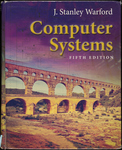
Computer Systems: 5th Edition
J Stanley Warford
2017
Provides a clear, detailed, step-by-step introduction to the central concepts in computer organization, assembly language, and computer architecture while aligning with the ACM/IEEE CS2013 guidelines for Systems Fundamentals. It urges students to explore the many dimensions of computer systems through a top-down approach to the levels of abstraction. By examining how the different levels of abstraction relate to one another, the text helps students look at computer systems and their components as a unified concept. -- Back cover.
-
Computer Systems
J. Stanley Warford
2017
Computer Systems, Fifth Edition provides a clear, detailed, step-by-step introduction to the central concepts in computer organization, assembly language, and computer architecture. It urges students to explore the many dimensions of computer systems through a top-down approach to levels of abstraction. By examining how the different levels of abstraction relate to one another, the text helps students look at computer systems and their components as a unified concept.
-
Walker Percy, Fyodor Dostoevsky, and the Search for Influence
Jessica Hooten Wilson
2017
Although Walker Percy named many influences on his work and critics have zeroed in on Kierkegaard in particular, no one has considered his intentional influence: the nineteenth-century Russian novelist Fyodor Dostoevsky. In a study that revives and complicates notions of adaptation and influence, Jessica Hooten Wilson details the long career of Walker Percy.
-
Walker Percy, Fyodor Dostoevsky, and the Search for Influence
Jessica Hooten Wilson
2017
Although Walker Percy named many influences on his work and critics have zeroed in on Kierkegaard in particular, no one has considered his intentional influence: the nineteenth-century Russian novelist Fyodor Dostoevsky. In a study that revives and complicates notions of adaptation and influence, Jessica Hooten Wilson details the long career of Walker Percy. Walker Percy, Fyodor Dostoevsky, and the Search for Influence demonstrates--through close reading of both writers' works, examination of archival materials, and biographical criticism--not only how pervasive and inescapable Dostoevsky's influence was but also how necessary it was to the distinctive strengths of Percy's fiction. From Dostoevsky, Percy learned how to captivate his non-Christian readership with fiction saturated by a Christian vision of reality. Not only was his method of imitation in line with this Christian faith but also the aesthetic mode and very content of his narratives centered on his knowledge of Christ. The influence of Dostoevsky on Percy, then, becomes significant as a modern case study for showing the illusion of artistic autonomy and long-held, Romantic assumptions about artistic originality. Ultimately, Wilson suggests, only by studying the good that came before can one translate it in a new voice for the here and now.
-
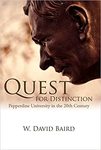
Quest for Distinction: Pepperdine University in the 20th Century
W. David Baird
2016
In 1937, Kansas auto parts magnate George Pepperdine founded a small, faith-based college in south central Los Angeles devoted to academic excellence and beautiful Christian living. By the end of the twentieth century, the institution named in his honor would rise above funding problems, accreditation troubles, tragedy, and controversy to become one of the nation's top universities. In this lively, meticulously researched narrative history, renowned historian and Seaver College Dean Emeritus W. David Baird explores Pepperdine's evolution and introduces us to the remarkable men and women behind it. You'll meet such influential figures as Batsell Baxter, the prominent Churches of Christ leader who became Pepperdine's first president; Mr. Pepperdine M. Norvel Young, whose vision transformed Pepperdine from a small liberal arts college to a prestigious university with schools and campuses around the world; William S. Banowsky, the charismatic young preacher who championed the creation of the Malibu campus; and Howard A. White, who reaffirmed the school's commitment to a Christian mission by defending and strengthening its historic connection to the Churches of Christ. Through their stories and others, Baird paints a vivid portrait of the university's quest to distinguish itself academically without sacrificing the Christian principles it was founded on.
-
Alasdair MacIntyre, Charles Taylor, and the Demise of Naturalism: Reunifying Political Theory and Social Science Kindle Edition
Jason Blakely
2016
Today the ethical and normative concerns of everyday citizens are all too often sidelined from the study of political and social issues, driven out by an effort to create a more “scientific” study. This book offers a way for social scientists and political theorists to reintegrate the empirical and the normative, proposing a way out of the scientism that clouds our age. In Alasdair MacIntyre, Charles Taylor, and the Demise of Naturalism, Jason Blakely argues that the resources for overcoming this divide are found in the respective intellectual developments of Charles Taylor and Alasdair MacIntyre. Blakely examines their often parallel intellectual journeys, which led them to critically engage the British New Left, analytic philosophy, phenomenology, continental hermeneutics, and modern social science. Although MacIntyre and Taylor are not sui generis, Blakely claims they each present a new, revived humanism, one that insists on the creative agency of the human person against reductive, instrumental, technocratic, and scientistic ways of thinking. The recovery of certain key themes in these philosophers’ works generates a new political philosophy with which to face certain unprecedented problems of our age. Taylor’s and MacIntyre’s philosophies give social scientists working in all disciplines (from economics and sociology to political science and psychology) an alternative theoretical framework for conducting research.
-
Alasdair Maclntyre, Charles Taylor, and the Demise of Naturalism: Reunifying Political Theory and Social Science
Jason Blakely
2016
Blakely argues that the resources for overcoming the divide between the empirical and the normative of society are available in the intellectual developments of Charles Taylor and Alasdair MacIntyre.
-
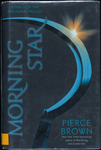
Morning Star
Pierce Brown
2016
Darrow would have lived in peace, but his enemies brought him war. The Gold overlords demanded his obedience, hanged his wife, and enslaved his people. But Darrow is determined to fight back. Risking everything to transform himself and breach Gold society, Darrow has battled to survive the cutthroat rivalries that breed Society's mightiest warriors, climbed the ranks, and waited patiently to unleash the revolution that will tear the hierarchy apart from within. Finally, the time has come. But devotion to honor and hunger for vengeance run deep on both sides. Darrow and his comrades-in-arms face powerful enemies without scruple or mercy. Among them are some Darrow once considered friends. To win, Darrow will need to inspire those shackled in darkness to break their chains, unmake the world their cruel masters have built, and claim a destiny too long denied -- and too glorious to surrender.
-

Morning Star
Pierce Brown
2016
Darrow would have lived in peace, but his enemies brought him war. The Gold overlords demanded his obedience, hanged his wife, and enslaved his people. But Darrow is determined to fight back. Risking everything to transform himself and breach Gold society, Darrow has battled to survive the cutthroat rivalries that breed Society's mightiest warriors, climbed the ranks, and waited patiently to unleash the revolution that will tear the hierarchy apart from within. Finally, the time has come. But devotion to honor and hunger for vengeance run deep on both sides. Darrow and his comrades-in-arms face powerful enemies without scruple or mercy. Among them are some Darrow once considered friends. To win, Darrow will need to inspire those shackled in darkness to break their chains, unmake the world their cruel masters have built, and claim a destiny too long denied -- and too glorious to surrender.
-
Seeking Security in an Insecure World
Dan Caldwell and Robert E. Williams
2016
This revised edition of Seeking Security in an Insecure World provides a thorough, accessible introduction to contemporary security studies. All chapters are updated and a wide range of new topics are discussed, including the Syrian civil war, Russia's annexation of Crimea and its intervention in East Ukraine, the global refugee crisis, China's military buildup, the impact of fracking on oil and gas markets, and rapidly evolving cyberwar capabilities. Each chapter also addresses what has been and can be done to enhance security. Overall, Seeking Security in an Insecure World offers a clear and compelling framework for understanding what security means today and how it can best be achieved. -- Provided by publisher.
-
Seeking Security in an Insecure World
Dan Caldwell and Robert E. Williams
2016
All chapters are updated and a wide range of new topics are discussed, including the Syrian civil war, Russia’s annexation of Crimea and its intervention in East Ukraine, the global refugee crisis, China’s military buildup, the impact of fracking on oil and gas markets, and rapidly evolving cyberwar capabilities. Each chapter also addresses what has been and can be done to enhance security. Overall, Seeking Security in an Insecure World offers a clear and compelling framework for understanding what security means today and how it can best be achieved.
-
Roots
Dyron Daughrity
2016
By uncovering?why we do what we do in church,? Christians can make more informed decisions about where they should take their churches in the future. Why do we do what we do in church? Roots answers that question. Readers will discover for themselves the history of seven important topics that are at the very heart of what it means to be a Christian. - Bible: Who decided on what the Bible should include? - Baptism: Why do some baptize infants and others baptize believers? - Eucharist: How did a?supper? turn into a tiny wafer and a sip of juice? - Church buildings: How did we get from meeting in homes to attending megachurch arenas - Pastors: How did church leadership become so professionalized and hierarchical? - Sermons: How did we get from?Love thy neighbor? to a 30-minute rhetorical performance? - Church Music: Early Christians chanted Psalms, but now we have Chris Tomlin. Why? Every Christian needs to know these things ... and decide what they believe.
-
Understanding World Christianity: India
Dyron B. Daughrity and Jesudas Athyal
2016
In this exciting volume, Dyron B. Daughrity and Jesudas M. Athyal offer an introduction to Indian Christianity that has been desperately needed by scholars, students, and interested readers alike. Rich in experience and knowledge, Daughrity and Athyal introduce readers to the vibrancy of Indian Christianity like no other authors have done before.
-
Understanding World Christianity: India
Dyron B. Daughrity and Jesudas Athyal
2016
In this exciting volume, Dyron B. Daughrity and Jesudas M. Athyal offer an introduction to Indian Christianity that has been desperately needed by scholars, students, and interested readers alike. Rich in experience and knowledge, Daughrity and Athyal introduce readers to the vibrancy of Indian Christianity.
-
Thomas Hardy: Folklore and Resistance
Jacqueline Dillion
2016
This book reassesses Hardy’s fiction in the light of his prolonged engagement with the folklore and traditions of rural England. Drawing on wide research, it demonstrates the pivotal role played in the novels by such customs and beliefs as ‘overlooking’, hag-riding, skimmington-riding, sympathetic magic, mumming, bonfire nights, May Day celebrations, Midsummer divination, and the ‘Portland Custom’. This study shows how such traditions were lived out in practice in village life, and how they were represented in written texts – in literature, newspapers, county histories, folklore books, the work of the Folklore Society, archival documents, and letters. It explores tensions between Hardy’s repeated insistence on the authenticity of his accounts and his engagement with contemporary anthropologists and folklorists, and reveals how his efforts to resist their ‘excellently neat’ categories of culture open up wider questions about the nature of belief, progress, and social change.
-

Open Borders and International Migration Policy: the Effects of Unrestricted Immigration in the United States, France, and Ireland
Joel S. Fetzer
2016
"Although political philosophers debate the morality of open borders, few social scientists have explored what would happen if immigration were no longer limited. This book looks at three historical examples of temporarily unrestricted migration into the United States, France, and Ireland: the arrival of Mariel Cubans in Miami (Florida) in 1980, the flight of Pied Noir and Harki refugees from Algeria to Marseille in 1962, and the migration of Poles and other new European Union 'Accession 8' citizens into Dublin in 2004. Based on personal interviews, archival research, and statistical analysis, the study finds that the effects of these population movements on the economics, politics, and social life of these cities were much less catastrophic than opponents of free immigration claim. Detailed chapters cover schools, crime, ethnic politics, unemployment and wages, public finances, housing, and racial violence"-- Provided by publisher.
-

Open Borders and International Migration Policy: The Effects of Unrestricted Immigration in the United States, France, and Ireland
Joel S. Fetzer
2016
Although philosophers debate the morality of open borders, few social scientists have explored what would happen if immigration were no longer limited. This book looks at three examples of temporarily unrestricted migration in Miami, Marseille, and Dublin and finds that the effects were much less catastrophic than opponents of immigration claim.
-
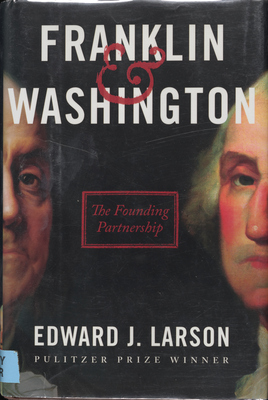
George Washington, Nationalist
Edward J. Larson
2016
George Washington was the unanimous choice of his fellow founders for president, and he is remembered to this day as an exceptional leader, but how exactly did this manifest itself during his lifetime? In George Washington, Nationalist, acclaimed author Edward J. Larson reveals the fascinating backstory of Washingtons leadership in the political, legal, and economic consolidation of the new nation, spotlighting his crucial role in forming a more perfect union. The years following the American Revolution were a critical period in American history, when the newly independent states teetered toward disunion under the Articles of Confederation. Looking at a selection of Washingtons most pivotal acts--including conferring with like-minded nationalists, establishing navigational rights on the Potomac, and quelling the near uprising of unpaid revolutionary troops against the Confederation Congress--Larson shows Washington's central role in the drive for reform leading up to the Constitutional Convention. His leadership at that historic convention, followed by his mostly behind-the-scenes efforts in the ratification process and the first federal election, and culminating in his inauguration as president, complete the picture of Washington as the nation's first citizen. This important and deeply researched book brings Washington's unique gift for leadership to life for modern readers, offering a timely addition to the growing body of literature on the Constitution, presidential leadership, executive power, and state-federal relations. -- Amazon.com.
-
George Washington, Nationalist
Edward J. Larson
2016
George Washington was the unanimous choice of his fellow founders for president, and he is remembered to this day as an exceptional leader, but how exactly did this manifest itself during his lifetime? In George Washington, Nationalist, acclaimed author Edward J. Larson reveals the fascinating backstory of Washington’s leadership in the political, legal, and economic consolidation of the new nation, spotlighting his crucial role in forming a more perfect union.
-
Golden Son
Pierce Brown
2015
"As a Red, Darrow grew up working the mines deep beneath the surface of Mars, enduring backbreaking labor while dreaming of the better future he was building for his descendants. But the Society he faithfully served was built on lies. Darrow's kind have been betrayed and denied by their elitist masters, the Golds--and their only path to liberation is revolution. And so Darrow sacrifices himself in the name of the greater good for which Eo, his true love and inspiration, laid down her own life. He becomes a Gold, infiltrating their privileged realm so that he can destroy it from within. A lamb among wolves in a cruel world, Darrow finds friendship, respect, and even love--but also the wrath of powerful rivals. Though the road ahead is fraught with danger and deceit, Darrow must choose to follow Eo's principles of love and justice to free his people"-- From the publisher's description.
-
Encountering Texts: the Multicultural Theatre Project and 'Minority' Literature
Joi Carr
2015
"Encountering texts represents the theory and praxis uncovered through an ongoing interdisciplinary arts-based critical pedagogy that engages students in critical self-reflection (disciplined, sustained thinking, requiring engagement) on difference. The Multicultural Theatre Project (MTP) is a dialogical encounter with literature through the dramatic arts. This book provides a blueprint for the multiple ways in which this enacted theory / method can be utilized as a high impact practice toward transformative learning. The significance of minority literature as fertile testing ground for raising and seeking to answer questions about difference is undisputed. To address this dynamic, this research utilizes Hans-Georg Gadamer's hermeneutical method of understanding to engage students in the interpretive process using theatre as methodology. Gadamer's concept, described as a fusion of horizons, provides a methodological approach by which students can bring their own "effective history" to the hermeneutical task. He argues that hidden prejudices keep the interpreter from hearing the text. Thus an awareness of these prejudices leads to an openness that allows the text to speak. The MTP facilitate this kind of subjectivity by engaging the interpreter holistically. This integrative work provides a promising pragmatic interdisciplinary approach to teaching and learning that creates bridges to liberatory knowledge, both cognitively and affectively." -- Back cover.
-
Encountering Texts: The Multicultural Theatre Project and «Minority» Literature
Joi Carr
2015
Encountering Texts represents the theory and praxis uncovered through an ongoing interdisciplinary arts-based critical pedagogy that engages students in critical self-reflection (disciplined, sustained thinking, requiring engagement) on difference. The Multicultural Theatre Project (MTP) is a dialogical encounter with literature through the dramatic arts. This book provides a blueprint for the multiple ways in which this enacted theory/method can be utilized as a high impact practice toward transformative learning. The significance of minority literature as fertile testing ground for raising and seeking to answer questions about difference is undisputed. To address this dynamic, this research utilizes Hans-Georg Gadamer’s hermeneutical method of understanding to engage students in the interpretive process using theatre as methodology. Gadamer’s concept, described as a fusion of horizons, provides a methodological approach by which students can bring their own «effective history» to the hermeneutical task. He argues that hidden prejudices keep the interpreter from hearing the text. Thus an awareness of these prejudices leads to an openness that allows the text to speak. The MTP facilitates this kind of subjectivity by engaging the interpreter holistically. This integrative work provides a promising pragmatic interdisciplinary approach to teaching and learning that creates bridges to liberatory knowledge, both cognitively and affectively.
-
The Harp of Prophecy: Early Christian Interpretation of the Psalms
Brian E. Daley and Paul R. Kolbet
2015
The Psalms generated more biblical commentary from early Christians than any other book of the Hebrew and Christian canon. While advances have been made in our understanding of the early Christian preoccupation with this book and the traditions employed to interpret it, no study on the Psalms traditions exists that can serve as a solid academic point of entry into the field. This collection of essays by distinguished patristic and biblical scholars fills this lacuna. It not only introduces readers to the main primary sources but also addresses the unavoidable interpretive issues present in the secondary literature. The essays in The Harp of Prophecy represent some of the very best scholarly approaches to the study of early Christian exegesis, bringing new interpretations to bear on the work of influential early Christian authorities such as Athanasius, Augustine, and Basil of Caesarea. Subjects that receive detailed study include the dynamics of early Christian political power, gender expressions, and the ancient conversation between Christian, Jewish, and Greek philosophical traditions. The essays and bibliographic materials enable readers to locate and read the early Christian sources for themselves and also serve to introduce the various interdisciplinary methods and perspectives that are currently brought to bear on early Christian psalm exegesis. Students and scholars of theology and biblical studies will be led in new directions of thought and interpretation by these innovative studies. -- Publisher's description.
-
To Whom does Christianity Belong?: Critical Issues in World Christianity
Dyron B. Daughrity
2015
To Whom Does Christianity Belong? is a question that is asked throughout the world today. In this exciting volume, an anchor to the Understanding World Christianity series, Dyron B. Daughrity helps readers map out the major changes that have taken place in recent years in the world's largest religion. By comparing trends, analyzing global Christian movements, and tracing the impact of Pentecostalism, interreligious dialogue, global missions, sexuality, birth rates, women, secularization, and migratory trends, Daughrity sketches a picture of a changing religion and gives the tools needed to understand it.
-
To Whom Does Christianity Belong?: Critical Issues in World Christianity
Dyron B. Daughrity
2015
In this exciting new volume, an anchor to the Understanding World Christianity series, Dyron B. Daughrity helps readers map out the major changes that have taken place in recent years in the world's largest religion. By comparing trends, analyzing global Christian movements, and tracing the impact of Pentecostalism, interreligious dialogue, global missions, birth rates, and migratory trends, Daughrity sketches a picture of a changing religion and gives the tools needed to understand it. From discussions of sexuality and afterlife to contemporary Christian music and secularization, this book provides a global perspective on what is happening within Christianity today.
-
Mapping Christian Rhetorics: Connecting Conversations, Charting New Territories
Michael-John DePalma
2015
The continued importance of Christian rhetorics in political, social, pedagogical, and civic affairs suggests that such rhetorics not only belong on the map of rhetorical studies, but are indeed essential to the geography of rhetorical studies in the twenty-first century. This collection argues that concerning ourselves with religious rhetorics in general and Christian rhetorics in particular tells us something about rhetoric itself―its boundaries, its characteristics, its functionings. In assembling original research on the intersections of rhetoric and Christianity from prominent and emerging scholars, Mapping Christian Rhetorics seeks to locate religion more centrally within the geography of rhetorical studies in the twenty-first century. It does so by acknowledging work on Christian rhetorics that has been overlooked or ignored; connecting domains of knowledge and research areas pertaining to Christian rhetorics that may remain disconnected or under connected; and charting new avenues of inquiry about Christian rhetorics that might invigorate theory-building, teaching, research, and civic engagement. In dividing the terrain of Christian rhetorics into four categories―theory, education, methodology, and civic engagement―Mapping Christian Rhetorics aims to foster connections among these areas of inquiry and spur future future collaboration between scholars of religious rhetoric in a range of research areas.
-
Mapping Christian Rhetorics: Connecting Conversations, Charting New Territories
Michael-John DePalma
2015
-
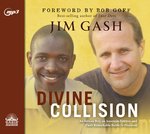
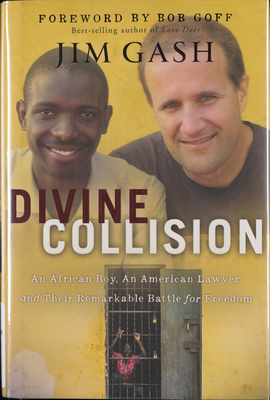
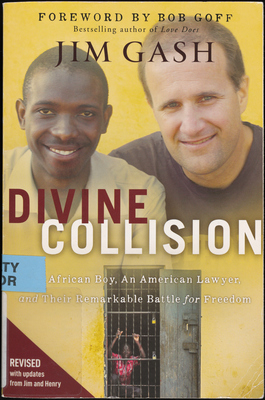
Divine Collision: An African Boy, An American Lawyer, and Their Remarkable Battle for Freedom
Jim Gash and Bob Goff
2015
Discover the compelling true story of a former LA lawyer and a Ugandan boy falsely accused of murder - two courageous friends brought together by God on a mission to reform criminal justice.
-
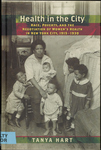
Health in the City: Race, Poverty, and the Negotiation of Women's Health in New York City, 1915-1930
Tanya Hart
2015
""At the turn of the twentieth century, black and white women migrated to New York City, a new place and environment swirling with ideas and practices of race, racism, germ theory and sanitation. Health in the City tells us the very human story of how pioneering, yet racialized health care thinking and services complicated the meaning of these women's motherhood as well as their own health and welfare. Hart's discovery and analysis of previously untapped archival records, offers an important narrative and reveals a remarkable mastery of historical methods that are a model of interdisciplinary.